Connecticut Residential Construction Contract (Home Improvement) (2026)
A contract between a homeowner and a contractor for building, remodeling or repair work — scope, schedule, price, payment milestones, change orders, insurance, warranty and the notices your state requires in the contract.
 View larger
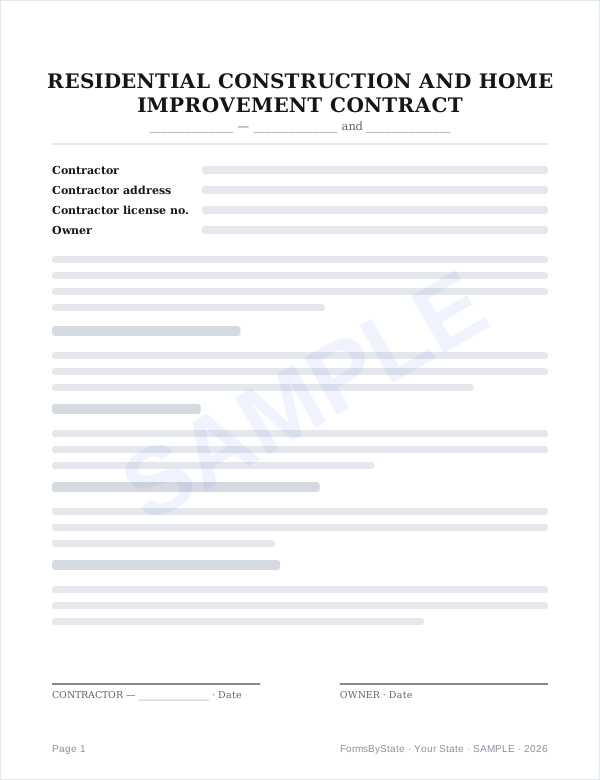
Sample first page of the Residential Construction Contract (Home Improvement). Your answers fill in the blanks; the clauses required in Connecticut are added automatically.
- Word
This preview updates as you type. Blank fields show as ____ .
What this document covers
- Owner, contractor and licence number
- Project address and full scope of work
- Start date and substantial completion date
- Fixed price, cost-plus or time and materials
- Down payment inside your state's legal cap
- Payment milestones tied to the work
- Written change-order procedure
- Permits, inspections and code compliance
- General liability and workers' compensation
- Warranty, termination, disputes and the notices your state mandates
Connecticut rules that this document follows
| Contractor license | Department of Consumer Protection (home improvement contractor registration) — A home improvement contract is not valid or enforceable against the owner unless it contains the contractor's name, address and certificate of registration number.Source: Conn. Gen. Stat. § 20-429(a) |
|---|---|
| License number on the contract | Required — the contract must state itSource: Conn. Gen. Stat. § 20-429(a) |
| Written contract required | Yes — A home improvement contract must be in writing, signed by the owner and the contractor, contain the entire agreement, the date of the transaction, the contractor's registration number, a notice of the owner's cancellation rights and the starting and completion dates. A contract that misses any of these cannot be enforced against the owner.Source: Conn. Gen. Stat. § 20-429(a) |
| Down payment cap | None confirmed — no statutory cap was found; a deposit tied to mobilisation and special-order materials is the norm |
| Required notices | NOTICE OF CANCELLATION RIGHTSSource: Conn. Gen. Stat. § 20-429(a)(6), (e) |
| Right to cancel | 3 business days — Because every Connecticut home improvement contract is a home solicitation sale, the owner may cancel until midnight of the third business day after signing, wherever the contract was signed.Source: Conn. Gen. Stat. § 20-429(e); ch. 740 |
Rules current as of 2026-09-14. Statutes change; verify before relying on them.
How to use this Residential Construction Contract (Home Improvement) in Connecticut
In Connecticut the contract is regulated, not just recommended: A home improvement contract must be in writing, signed by the owner and the contractor, contain the entire agreement, the date of the transaction, the contractor's registration number, a notice of the owner's cancellation rights and the starting and completion dates. A contract that misses any of these cannot be enforced against the owner. (Conn. Gen. Stat. § 20-429(a)) This template writes the scope, the dates, the price, the payment milestones and the change-order rule into one document and prints the notices your state requires around it.
Price the job in one of three ways. A fixed price puts the risk of overruns on the contractor and is what most homeowners should ask for. Cost plus a fee makes sense for open-ended renovation, but only with a not-to-exceed number and access to the books. Time and materials suits small repairs where nobody can scope the work in advance. Tie the rest to milestones a person can stand in the room and verify — never to a calendar.
Put the licence number on the contract: A home improvement contract is not valid or enforceable against the owner unless it contains the contractor's name, address and certificate of registration number. (Conn. Gen. Stat. § 20-429(a)) Ask for a certificate of general liability insurance and, where the contractor has employees, workers' compensation. An uninsured injury on your property is the one construction risk a homeowner cannot fix afterwards.
The contract has to carry the notices Connecticut prescribes — NOTICE OF CANCELLATION RIGHTS — and this template prints each of them. The owner's cancellation right is state law: Because every Connecticut home improvement contract is a home solicitation sale, the owner may cancel until midnight of the third business day after signing, wherever the contract was signed. (Conn. Gen. Stat. § 20-429(e); ch. 740) Sign before any work begins, hand the owner a full copy the same day, and collect a lien waiver with every payment.
Frequently asked questions
Does Connecticut require a written home improvement contract?
Yes. A home improvement contract must be in writing, signed by the owner and the contractor, contain the entire agreement, the date of the transaction, the contractor's registration number, a notice of the owner's cancellation rights and the starting and completion dates. A contract that misses any of these cannot be enforced against the owner. (Conn. Gen. Stat. § 20-429(a))
How big a down payment can a contractor ask for in Connecticut?
No statutory down-payment cap was confirmed for Connecticut. Even so, a deposit larger than what mobilisation and special-order materials actually cost is a warning sign — pay for work, not for promises.
Can I cancel a signed contract in Connecticut?
Yes. Because every Connecticut home improvement contract is a home solicitation sale, the owner may cancel until midnight of the third business day after signing, wherever the contract was signed. (Conn. Gen. Stat. § 20-429(e); ch. 740)
What notices must the contract itself contain in Connecticut?
These: NOTICE OF CANCELLATION RIGHTS (Conn. Gen. Stat. § 20-429(a)(6), (e)). This template prints each of them, using the statutory wording where the statute prescribes the words.
Does the contractor's license number have to be on the contract?
Yes. A home improvement contract is not valid or enforceable against the owner unless it contains the contractor's name, address and certificate of registration number. (Conn. Gen. Stat. § 20-429(a)) A contract without it can expose the contractor to discipline and, in some states, make the contract hard to enforce.
Who pays if a subcontractor liens my house after I paid the contractor?
In most states the lien attaches to the house even though the owner paid, which is why this contract makes the contractor pay downstream and deliver a lien waiver with every payment. Collect the waivers before releasing each milestone, and keep the final payment until the last waiver is in hand.
Other names
- home improvement contract
- residential construction contract
- remodeling contract
- contractor agreement
- general contractor contract
- home remodeling agreement
- renovation contract
- construction agreement homeowner
- home repair contract
- builder contract
Related documents
- Commercial Lease Agreement — Connecticut
- Bill of Sale — Connecticut
- Promissory Note — Connecticut
- Independent Contractor Agreement — Connecticut
Other states
- Alabama
- Alaska
- Arizona
- Arkansas
- California
- Colorado
- Delaware
- District of Columbia
- Florida
- Georgia
- Hawaii
- Idaho
- Illinois
- Indiana
- Iowa
- Kansas
- Kentucky
- Louisiana
- Maine
- Maryland
- Massachusetts
- Michigan
- Minnesota
- Mississippi
- Missouri
- Montana
- Nebraska
- Nevada
- New Hampshire
- New Jersey
- New Mexico
- New York
- North Carolina
- North Dakota
- Ohio
- Oklahoma
- Oregon
- Pennsylvania
- Rhode Island
- South Carolina
- South Dakota
- Tennessee
- Texas
- Utah
- Vermont
- Virginia
- Washington
- West Virginia
- Wisconsin
- Wyoming
FormsByState provides self-help document templates and general information, not legal advice. We are not a law firm. For advice about your situation consult a licensed attorney in your state.
Download your document
Residential Construction Contract (Home Improvement)
One-time payment. No subscription, no card on file, no trial.
Single document
$19 one-time
- PDF + Word, no watermark
- Unlimited edits for 90 days
- State-specific disclosures included
7-day pass
$14.99 one-time
- Every document for 7 days
- Unlimited downloads
- Never renews — ends automatically
Pro
$19 /month
- Unlimited documents and downloads
- All 51 jurisdictions
- Cancel in one click
Secure checkout by Stripe. 30-day money-back guarantee.
Already purchased? Your access is restored automatically on this device or after signing in.