Pennsylvania Commercial Lease Agreement (2026)
Lease retail, office or industrial space: gross, modified gross or triple-net with pro-rata pass-throughs, rent escalation, renewal options, TI allowance, insurance, default and holdover terms, plus your state's deposit rule, statutory disclosures, landlord's lien, cure periods, rent taxes and signing formalities.
 View larger
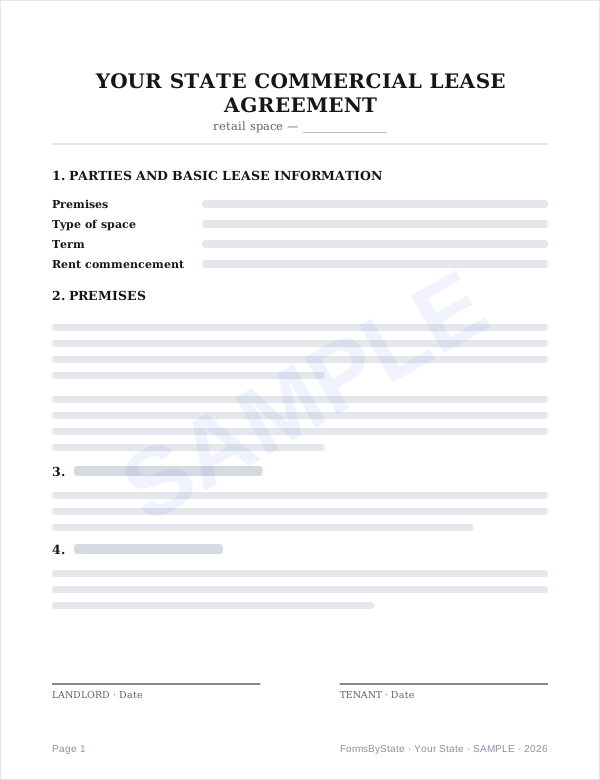
Sample first page of the Commercial Lease Agreement. Your answers fill in the blanks; the clauses required in Pennsylvania are added automatically.
- Word
This preview updates as you type. Blank fields show as ____ .
What this document covers
- Landlord, tenant and optional personal guarantor
- Retail, office or industrial premises with rentable area and pro-rata share
- Term, rent commencement and renewal options
- Base rent with fixed or CPI escalation
- Gross, modified gross or triple-net (NNN) pass-throughs
- Security deposit under the state rule
- Permitted and exclusive use, hours, ADA compliance
- Tenant improvements and maintenance split
- Assignment, subletting, insurance and indemnity
- Default, remedies, landlord's lien and holdover
- SNDA, estoppel, relocation and broker disclosure
- State disclosures, exhibits and guaranty
Pennsylvania rules that this document follows
| Commercial security deposit | Varies — No statute — amount and return terms as the lease providesSource: No statute governs security deposits for non-residential leases; 68 P.S. § 250.511a et seq. applies to residential deposits only |
|---|---|
| Default notice before eviction | Varies — 10 days' notice for nonpayment (lease may vary)Source: 68 P.S. § 250.501 |
| Landlord's lien on tenant property | Varies — Distress for rent available on the tenant's goods on the premises; may be waived in the leaseSource: 68 P.S. § 250.302 |
| Tax on commercial rent | Varies — Local tax — Philadelphia Business Use and Occupancy Tax: users or occupiers of real estate for business purposes in Philadelphia pay 1.21% of the assessed value of the space used (less a $2,000 monthly exemption per property), collected by the landlord and remitted monthly; no rent tax elsewhere in the CommonwealthSource: Phila. Code § 19-1806 |
| Notary / recording for long leases | Varies — No notary or witnesses; acknowledgment only to recordSource: 68 P.S. § 250.202 |
| Required lease disclosures | None specific to commercial leasesSource: 68 P.S. § 250.101 et seq. |
Rules current as of 2026-09-14. Statutes change; verify before relying on them.
How to use this Commercial Lease Agreement in Pennsylvania
Start with the exact legal names of both entities and decide on a personal guaranty. Enter the rentable area of the premises and the building — that ratio becomes the tenant's share of taxes, insurance and CAM in a modified gross or NNN lease — then set the term, rent commencement, renewal options and escalation. Choose the maintenance split and insurance limits deliberately: they are the clauses that cost money later.
Answer the state-disclosure questions, review the cure periods (pre-filled with Pennsylvania's statutory figures where they exist) and decide whether to waive the landlord's lien for the tenant's equipment lender. Budget for the rent tax (Phila. Code § 19-1806). Both parties sign with name and title; attach the floor plan, work letter, guaranty and rules.
Frequently asked questions
Is a commercial security deposit regulated in Pennsylvania?
No — Pennsylvania has no statute on commercial security deposits (residential rules do not apply), so the amount, use and return are whatever the lease says; this lease sets a 30-day return with an itemized statement.
How much notice must I give a commercial tenant before eviction in Pennsylvania?
Pennsylvania requires 10 days' written notice before an eviction action for nonpayment (68 P.S. § 250.501); the lease may set a different contractual cure period, and this lease pre-fills it with the statutory figure.
Is there a tax on commercial rent in Pennsylvania?
Yes. Philadelphia Business Use and Occupancy Tax: users or occupiers of real estate for business purposes in Philadelphia pay 1.21% of the assessed value of the space used (less a $2,000 monthly exemption per property), collected by the landlord and remitted monthly; no rent tax elsewhere in the Commonwealth (Phila. Code § 19-1806). The lease makes it additional rent.
Does a commercial lease need a notary or witnesses in Pennsylvania?
No — a written lease signed by both parties is valid for any term; a notary is needed only if you record the lease or a memorandum of lease (68 P.S. § 250.202).
What is the difference between a gross and a triple-net (NNN) lease?
In a gross lease the base rent covers taxes, insurance and common-area maintenance, so the landlord bears cost increases. In a triple-net lease the tenant pays its pro-rata share of those three items on top of base rent, reconciled annually against actual costs. Modified gross sits between: the tenant pays only increases over a base year. This lease drafts all three, and in Pennsylvania the landlord also keeps a statutory lien on the tenant's goods (68 P.S. § 250.302) unless waived.
Other names
- commercial lease
- business lease agreement
- retail lease
- office lease
- industrial lease
- warehouse lease
- triple net lease
- NNN lease
- gross lease
- storefront lease
Related documents
- Residential Lease Agreement — Pennsylvania
- Room Rental Agreement — Pennsylvania
- Residential Sublease Agreement — Pennsylvania
- Rental Application — Pennsylvania
Other states
- Alabama
- Alaska
- Arizona
- Arkansas
- California
- Colorado
- Connecticut
- Delaware
- District of Columbia
- Florida
- Georgia
- Hawaii
- Idaho
- Illinois
- Indiana
- Iowa
- Kansas
- Kentucky
- Louisiana
- Maine
- Maryland
- Massachusetts
- Michigan
- Minnesota
- Mississippi
- Missouri
- Montana
- Nebraska
- Nevada
- New Hampshire
- New Jersey
- New Mexico
- New York
- North Carolina
- North Dakota
- Ohio
- Oklahoma
- Oregon
- Rhode Island
- South Carolina
- South Dakota
- Tennessee
- Texas
- Utah
- Vermont
- Virginia
- Washington
- West Virginia
- Wisconsin
- Wyoming
FormsByState provides self-help document templates and general information, not legal advice. We are not a law firm. For advice about your situation consult a licensed attorney in your state.
Download your document
Commercial Lease Agreement
One-time payment. No subscription, no card on file, no trial.
Single document
$19 one-time
- PDF + Word, no watermark
- Unlimited edits for 90 days
- State-specific disclosures included
7-day pass
$14.99 one-time
- Every document for 7 days
- Unlimited downloads
- Never renews — ends automatically
Pro
$19 /month
- Unlimited documents and downloads
- All 51 jurisdictions
- Cancel in one click
Secure checkout by Stripe. 30-day money-back guarantee.
Already purchased? Your access is restored automatically on this device or after signing in.