South Carolina Promissory Note (2026)
A secured or unsecured loan note with installment or lump-sum repayment, interest within your state's legal limit, late fees and default terms.
 View larger
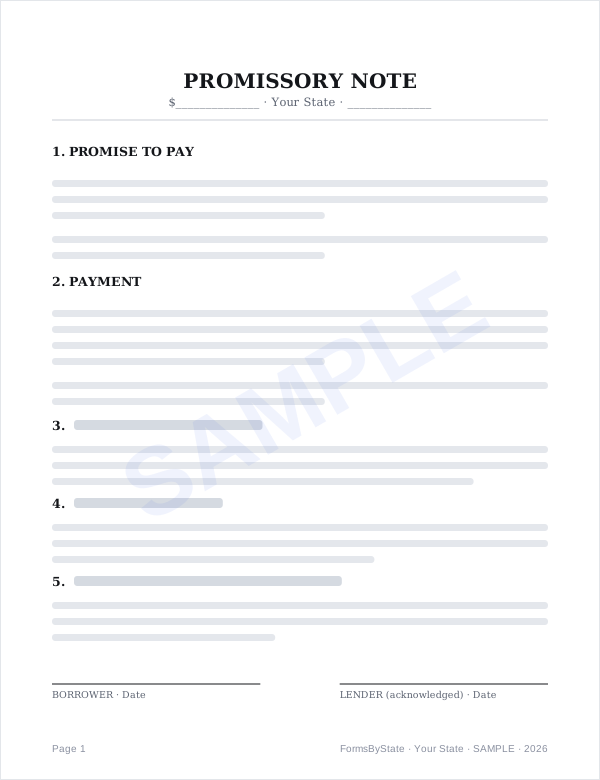
Sample first page of the Promissory Note. Your answers fill in the blanks; the clauses required in South Carolina are added automatically.
- Word
This preview updates as you type. Blank fields show as ____ .
What this document covers
- Borrower, lender and optional cosigner
- Principal, date and purpose (personal or business)
- Interest rate checked against the state usury ceiling
- Installments, lump sum or on demand with amortized payment
- Late charge and default interest
- Usury savings clause
- Default, cure period and acceleration
- Collateral and UCC or title lien
- Prepayment without penalty
- Cosigner notice (FTC / California)
South Carolina rules that this document follows
| Maximum interest (private loans) | No cap on interest agreed in writing — No cap on interest agreed in writing between private parties; 8.75% absent agreement; supervised consumer lenders must post/file rates under § 37-3-201Source: S.C. Code § 34-31-20 |
|---|---|
| Legal rate when none is stated | 8.75%Source: S.C. Code § 34-31-20(A) |
| Late fees | No statutory cap on late fees for private (non-consumer-lender) loans; fee must be a reasonable liquidated-damages estimate and, together with interest, must not push the effective rate above the usury ceiling |
| Cosigner notice | Included when a cosigner is namedSource: 16 C.F.R. § 444.3 |
| Time to sue on a written note | 3 yearsSource: S.C. Code § 15-3-530(1) |
| Notarization / witnesses | Not required (optional for evidentiary value) |
Rules current as of 2026-10-27. Statutes change; verify before relying on them.
How to use this Promissory Note in South Carolina
Keep the interest rate at or below the South Carolina ceiling shown above; a usurious note can cost the lender all interest and more, and late fees count toward the ceiling. For loans between family members, the IRS applicable federal rate (AFR) is the minimum to avoid imputed-gift issues on loans above $10,000.
If a cosigner signs, give them the Notice to Cosigner (Section 7) before they sign — in California and under the FTC rule the guaranty is unenforceable without it.
Sign one original; the lender keeps it and the borrower keeps a copy. When the note is paid, the lender should mark it 'PAID IN FULL' and return it.
Frequently asked questions
What is the maximum interest rate I can charge in South Carolina?
There is no ceiling on interest agreed in a written note in South Carolina; the 8.75% legal rate applies only when no rate is stated (S.C. Code § 34-31-20).
Does a promissory note need a notary or witnesses?
No. A note signed by the borrower is enforceable in South Carolina. Notarizing is optional. For a loan secured by a titled vehicle, have the lien noted on the certificate of title at the DMV — a UCC-1 does not perfect a lien on a titled vehicle; for equipment or other goods, file a UCC-1 financing statement.
How long can the lender sue on an unpaid note?
3 years from default (S.C. Code § 15-3-530(1)).
Why does the note ask whether the loan is personal or business?
Most usury statutes set a lower ceiling for personal, family or household loans and exempt or raise the ceiling for business loans, loans to entities, or large loans. The borrower's written representation in Section 1 is what a court looks at to decide which ceiling applies — so it must be truthful.
Other names
- loan agreement
- IOU
- personal loan contract
- secured promissory note
- family loan agreement
- demand note
- installment note
- loan note
Related documents
- Room Rental Agreement — South Carolina
- Commercial Lease Agreement — South Carolina
- Rental Application — South Carolina
- Demand Letter — South Carolina
- All South Carolina forms →
Other states
- Alabama
- Alaska
- Arizona
- Arkansas
- California
- Colorado
- Connecticut
- Delaware
- District of Columbia
- Florida
- Georgia
- Hawaii
- Idaho
- Illinois
- Indiana
- Iowa
- Kansas
- Kentucky
- Louisiana
- Maine
- Maryland
- Massachusetts
- Michigan
- Minnesota
- Mississippi
- Missouri
- Montana
- Nebraska
- Nevada
- New Hampshire
- New Jersey
- New Mexico
- New York
- North Carolina
- North Dakota
- Ohio
- Oklahoma
- Oregon
- Pennsylvania
- Rhode Island
- South Dakota
- Tennessee
- Texas
- Utah
- Vermont
- Virginia
- Washington
- West Virginia
- Wisconsin
- Wyoming
FormsByState provides self-help document templates and general information, not legal advice. We are not a law firm. For advice about your situation consult a licensed attorney in your state.
Download your document
Promissory Note
$29 one-time
Lawyer sites charge $35–$139 for the same document
- PDF + Word, no watermark
- Edit & re-download free for 14 days
- State-specific disclosures included
Secure checkout by Stripe. 30-day money-back guarantee.
Visa · Mastercard · Amex · Apple Pay · Google Pay
Need more than one document?
Already purchased? Your access is restored automatically on this device or after signing in.