Utah Room Rental Agreement (2026)
Rent out a room in your home or apartment: private room, shared areas, house rules, utilities split, deposit and notice terms that follow your state's law.
 View larger
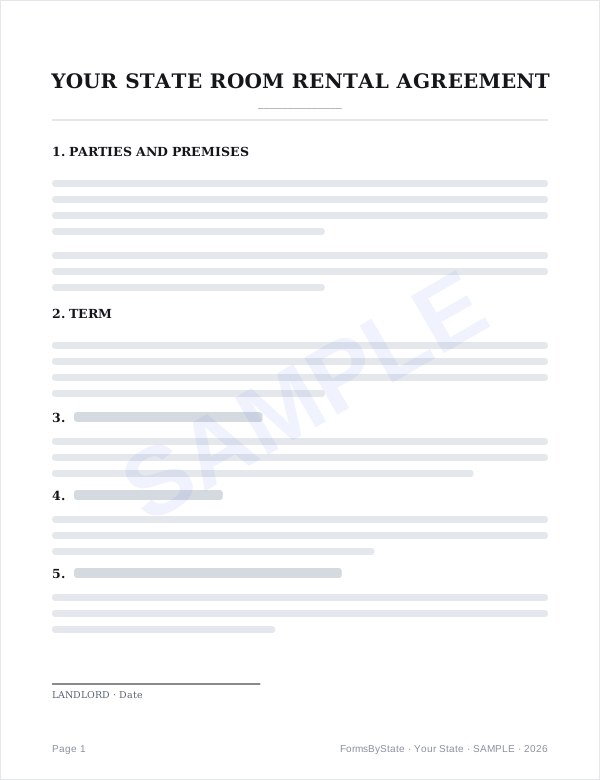
Sample first page of the Room Rental Agreement. Your answers fill in the blanks; the clauses required in Utah are added automatically.
- Word
This preview updates as you type. Blank fields show as ____ .
What this document covers
- Homeowner or primary tenant and the room renter
- The private room and the shared areas
- Month-to-month or fixed term with state notice rules
- Rent, due day and late fee within the state cap
- Utilities included, split or fixed
- Security deposit cap and return
- Overnight guests, quiet hours, smoking and pets
- Cleaning and chores
- Landlord entry and repairs
- State disclosures and lodger rules
Utah rules that this document follows
| Security deposit limit | No statutory limitSource: No statutory limit (Utah Code § 57-17-1) |
|---|---|
| Deposit return deadline | 30 days after move-outSource: Utah Code § 57-17-3(2) |
| Interest on deposit | Not requiredSource: Utah Code § 57-17-1 et seq. (no interest requirement) |
| Late fees | Max greater of $75 or 10% of the monthly rentSource: Utah Code § 57-22-4(5) (2024) |
| Landlord entry notice | 24 hoursSource: Utah Code § 57-22-4(2) |
| Notice to end month-to-month | Landlord 15 days / Tenant 15 daysSource: Utah Code § 78B-6-802(1)(b)(i) |
Rules current as of 2026-10-27. Statutes change; verify before relying on them.
How to use this Room Rental Agreement in Utah
Describe the room and the shared areas precisely, set utilities as a fixed charge or state the split formula to avoid monthly arguments, and put guest, quiet-hour and cleaning rules in writing. Answer the state disclosure questions (flood zone, sprinklers, bed bugs and the like) — they print as actual statements in the agreement. Give the renter a copy, a receipt for the deposit and every attachment listed at the end.
If you are a tenant subletting a room, confirm your lease allows it and get your landlord's written consent first.
Frequently asked questions
Do landlord-tenant laws apply when I rent a room in my own home in Utah?
In most states yes, including deposit rules, statutory disclosures and eviction procedures, although some states exempt owner-occupied homes from certain rules (for example, parts of the federal Fair Housing Act under the 'Mrs. Murphy' exemption). This agreement follows Utah's general residential rules and prints the state's statutory disclosures that apply to a room letting.
Can I remove a roommate without going to court?
No. Once a person is a paying occupant, self-help removal is illegal. Serve the Utah notice and, if needed, file an eviction case.
Other names
- roommate agreement
- rent a room contract
- lodger agreement
- shared housing agreement
- room lease
- house share agreement
- boarder agreement
Related documents
- Residential Lease Agreement — Utah
- Residential Sublease Agreement — Utah
- Commercial Lease Agreement — Utah
- Rental Application — Utah
- All Utah forms →
Other states
- Alabama
- Alaska
- Arizona
- Arkansas
- California
- Colorado
- Connecticut
- Delaware
- District of Columbia
- Florida
- Georgia
- Hawaii
- Idaho
- Illinois
- Indiana
- Iowa
- Kansas
- Kentucky
- Louisiana
- Maine
- Maryland
- Massachusetts
- Michigan
- Minnesota
- Mississippi
- Missouri
- Montana
- Nebraska
- Nevada
- New Hampshire
- New Jersey
- New Mexico
- New York
- North Carolina
- North Dakota
- Ohio
- Oklahoma
- Oregon
- Pennsylvania
- Rhode Island
- South Carolina
- South Dakota
- Tennessee
- Texas
- Vermont
- Virginia
- Washington
- West Virginia
- Wisconsin
- Wyoming
FormsByState provides self-help document templates and general information, not legal advice. We are not a law firm. For advice about your situation consult a licensed attorney in your state.
Download your document
Room Rental Agreement
$19 one-time
Lawyer sites charge $35–$139 for the same document
- PDF + Word, no watermark
- Edit & re-download free for 14 days
- State-specific disclosures included
Secure checkout by Stripe. 30-day money-back guarantee.
Visa · Mastercard · Amex · Apple Pay · Google Pay
Need more than one document?
Landlord?
Already purchased? Your access is restored automatically on this device or after signing in.