New York Residential Sublease Agreement (2026)
Sublet your apartment or a room to a subtenant: master-lease incorporation, landlord consent with your state's rule, rent, deposit and disclosures that follow state law, plus a one-page consent form for the landlord.
 View larger
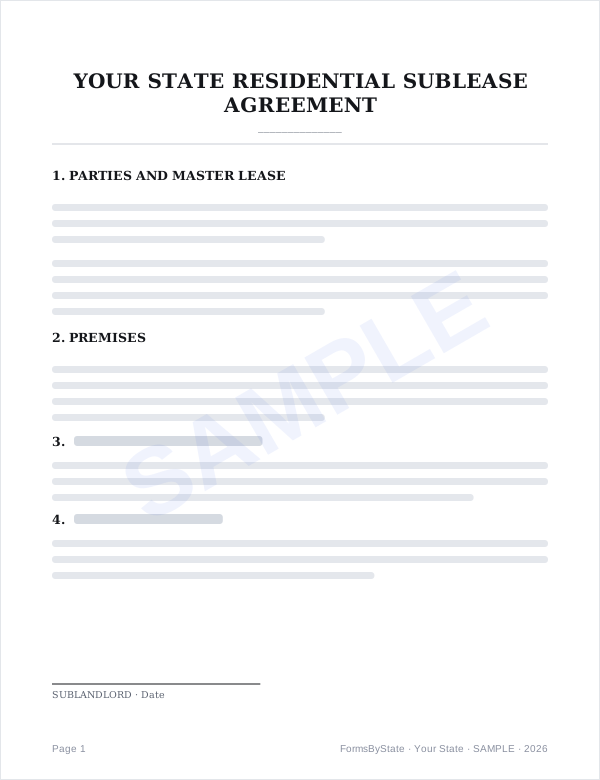
Sample first page of the Residential Sublease Agreement. Your answers fill in the blanks; the clauses required in New York are added automatically.
- Word
This preview updates as you type. Blank fields show as ____ .
What this document covers
- Sublandlord, subtenant, landlord and the master lease
- Whole unit or a room, with shared areas
- Term that ends before the master lease
- Rent, due day and late fee within the state cap
- Security deposit cap and return deadline
- Utilities included, split, fixed or direct
- Landlord consent and the state consent rule
- Master-lease incorporation and subtenant duties
- Federal lead-paint and state disclosures
- Default, termination and no further subletting
- One-page Landlord Consent to Sublease form
New York rules that this document follows
| Consent to sublet | Landlord's consent required by statute; may not be unreasonably withheld in buildings of 4+ units; landlord must answer within 30 days or consent is deemed givenSource: N.Y. Real Prop. Law § 226-b (tenant may not sublet without the landlord's written consent; in buildings of 4+ units consent may not be unreasonably withheld, landlord must respond within 30 days of the tenant's request and silence is deemed consent; in smaller buildings consent may be withheld without cause but the tenant may then be released from the lease on 30 days' notice) |
|---|---|
| Security deposit limit | one month's rentSource: N.Y. Gen. Oblig. Law § 7-108(1-a)(a) |
| Deposit return deadline | 14 days after move-outSource: N.Y. Gen. Oblig. Law § 7-108(1-a)(e) |
| Interest on deposit | Required (buildings with 6+ units)Source: N.Y. Gen. Oblig. Law § 7-103(2-a) (buildings with 6+ units; landlord may retain 1% admin fee) |
| Late fees | Lesser of $50 or 5% of the monthly rentSource: N.Y. Real Prop. Law § 238-a(2) |
| Notice to end month-to-month | Landlord 30/60/90 days by length of tenancy / Tenant 30 daysSource: N.Y. Real Prop. Law § 226-c (landlord: 30 days if tenancy < 1 yr, 60 days if 1–2 yrs, 90 days if 2+ yrs); § 232-b (tenant, outside NYC) |
| Required disclosures | Lead-Based Paint Disclosure (pre-1978 housing); Sprinkler System Disclosure; Flood History and Risk Disclosure; Good Cause Eviction Law Notice; NYC Bedbug Disclosure (DHCR form); NYC Window Guard Notice; NYC Indoor Allergen Hazards Notice; NYC Smoke/CO Detector and Stove Knob Notices; NYC Smoking Policy Disclosure; Rent Stabilization Lease RiderSource: New York Real Property Law Article 7 (§§ 220–238); General Obligations Law §§ 7-103 to 7-109; Housing Stability and Tenant Protection Act of 2019 |
| Rent control / local rules | Rent-stabilized apartments: the tenant must keep the unit as a primary residence, may sublet for no more than 2 years in any 4-year period, and may charge the subtenant no more than the legal rent plus a 10% furniture allowance (9 NYCRR § 2525.6).Source: N.Y. Real Prop. Law § 226-b |
Rules current as of 2026-09-14. Statutes change; verify before relying on them.
How to use this Residential Sublease Agreement in New York
Start with your own lease: find the subletting clause and get the landlord's written consent on the attached form before anyone moves in. Name the master lease and its end date so the sublease can never outlast it, describe exactly what is sublet (whole unit or a room plus shared areas), and set rent and deposit within New York's caps — the deposit rules bind you as the subtenant's landlord.
Answer the disclosure questions from your own lease packet (lead paint, flood, bed bugs and the like) and give the subtenant a copy of the master lease, every attachment and a deposit receipt. Remember that you stay liable to the landlord for everything the subtenant does.
Frequently asked questions
Can I sublet my apartment in New York without my landlord's permission?
Landlord's consent required by statute; may not be unreasonably withheld in buildings of 4+ units; landlord must answer within 30 days or consent is deemed given (N.Y. Real Prop. Law § 226-b). Whatever the statute says, read your lease first: almost every residential lease requires the landlord's written consent, and subletting in breach of the lease is grounds for eviction of both you and the subtenant. This agreement records the consent and attaches a one-page form for the landlord to sign.
Who holds the subtenant's security deposit and when must it be returned in New York?
You do, as the subtenant's landlord. New York's deposit cap and return deadline apply to you — return it with an itemized statement within 14 days after the subtenant moves out, regardless of whether your own landlord has returned your deposit.
How do I end a month-to-month sublease in New York?
The subtenant gives you at least 30 days' written notice; you give the subtenant the notice New York law requires of a landlord (30 days or more depending on length of tenancy). The sublease also ends automatically when your master lease ends.
Other names
- sublet agreement
- sublet contract
- sublease contract
- apartment sublease
- room sublease
- sublet lease
- sublessor sublessee agreement
- tenant to tenant lease
Related documents
- Residential Lease Agreement — New York
- Room Rental Agreement — New York
- Commercial Lease Agreement — New York
- Rental Application — New York
Other states
- Alabama
- Alaska
- Arizona
- Arkansas
- California
- Colorado
- Connecticut
- Delaware
- District of Columbia
- Florida
- Georgia
- Hawaii
- Idaho
- Illinois
- Indiana
- Iowa
- Kansas
- Kentucky
- Louisiana
- Maine
- Maryland
- Massachusetts
- Michigan
- Minnesota
- Mississippi
- Missouri
- Montana
- Nebraska
- Nevada
- New Hampshire
- New Jersey
- New Mexico
- North Carolina
- North Dakota
- Ohio
- Oklahoma
- Oregon
- Pennsylvania
- Rhode Island
- South Carolina
- South Dakota
- Tennessee
- Texas
- Utah
- Vermont
- Virginia
- Washington
- West Virginia
- Wisconsin
- Wyoming
FormsByState provides self-help document templates and general information, not legal advice. We are not a law firm. For advice about your situation consult a licensed attorney in your state.
Download your document
Residential Sublease Agreement
One-time payment. No subscription, no card on file, no trial.
Single document
$9 one-time
- PDF + Word, no watermark
- Unlimited edits for 90 days
- State-specific disclosures included
7-day pass
$14.99 one-time
- Every document for 7 days
- Unlimited downloads
- Never renews — ends automatically
Pro
$19 /month
- Unlimited documents and downloads
- All 51 jurisdictions
- Cancel in one click
Secure checkout by Stripe. 30-day money-back guarantee.
Already purchased? Your access is restored automatically on this device or after signing in.